
Industry / Supply Chain
AI Automation for Supply Chain Planning and Coordination.
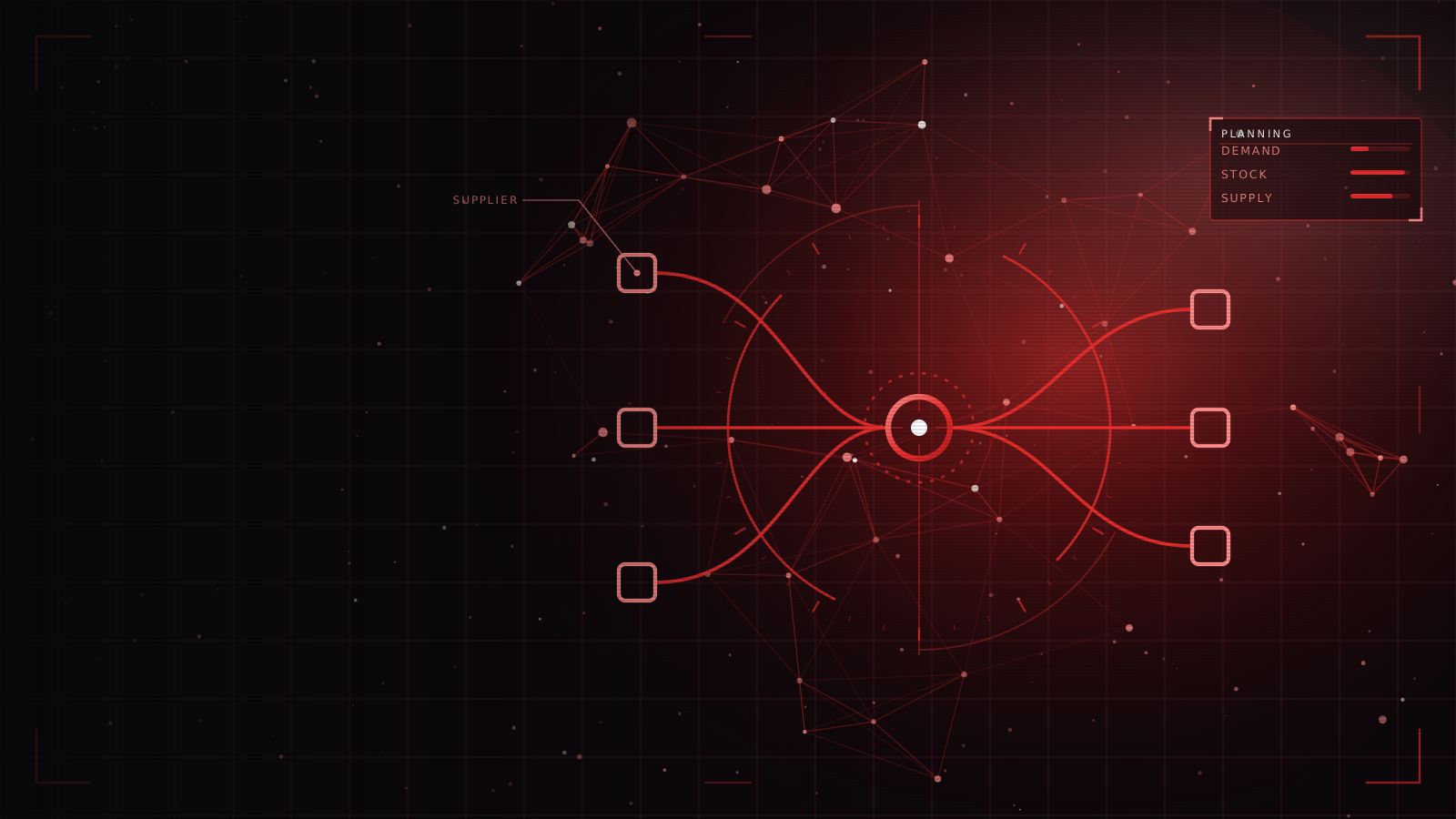
IICL helps planners spend less time assembling information and more time deciding by connecting signals, tolerances, suppliers and exception ownership.
Operating picture ILLUSTRATIVE
TRIGGER Demand, supply or logistics signal changes the plan.
DECISION Does this breach a planning tolerance or need a planner call?
ACTION Update the coordination view, or raise an owned exception.
OWNER Planner owns the plan; automation prepares the evidence.
Representative workflow shown for review. Planning tolerances are configured with the supply chain function.
The job Give planners a current, trusted picture and route exceptions to an owner quickly.
Three workflows
Three supply chain workflows that decide the week.
01
Demand signals Consolidating the signals that move the plan into one comparable view. 02
Supplier coordination Chasing, confirming and recording supplier commitments without email archaeology. 03
Exception and risk Surfacing the deviations that need a decision, with the supporting detail attached. Controls
Planning ownership and data lineage.
Automation assembles and highlights. Planners decide, and every number can be traced back to its source.
Planning ownership
Plan changes are made by planners with the authority to make them.
Data lineage
Every figure in the view is traceable to a source system and timestamp.
Approval
Commitments to suppliers and customers follow existing approval rules.
Relevant capability
What we bring to a supply chain engagement.
Start with the exception that costs the most time.
The assessment maps signals, tolerances and owners so the first automation removes work rather than adding a dashboard.